Planning a hunting trip to New Zealand is straightforward when you know what to prepare before you travel. This page covers the key things to organise before arrival — including flights, entry requirements, firearms, travel insurance, gear, clothing, weather, electrical adapters and arrival logistics.
Whether this is your first New Zealand hunt or you have hunted internationally before, our aim is to make the process as simple as possible so you arrive ready to enjoy your safari.
Quick pre-trip checklist
Before you travel, make sure you have:
- Booked flights into Christchurch International Airport
- Allowed for the extra travel day when flying from North America
- Booked your first night in Christchurch, if needed
- Completed your NZeTA or visitor entry requirements
- Completed your New Zealand Traveller Declaration before arrival
- Cleaned boots and hunting gear before flying
- Organised travel insurance
- Decided whether to bring your own rifle or use one of ours
- Completed firearm paperwork if bringing your own rifle
- Prepared clothing and gear for New Zealand’s changeable weather
- Checked your phone, power adapters and payment arrangements
- Contacted us with any arrival or transfer questions
Flying to New Zealand
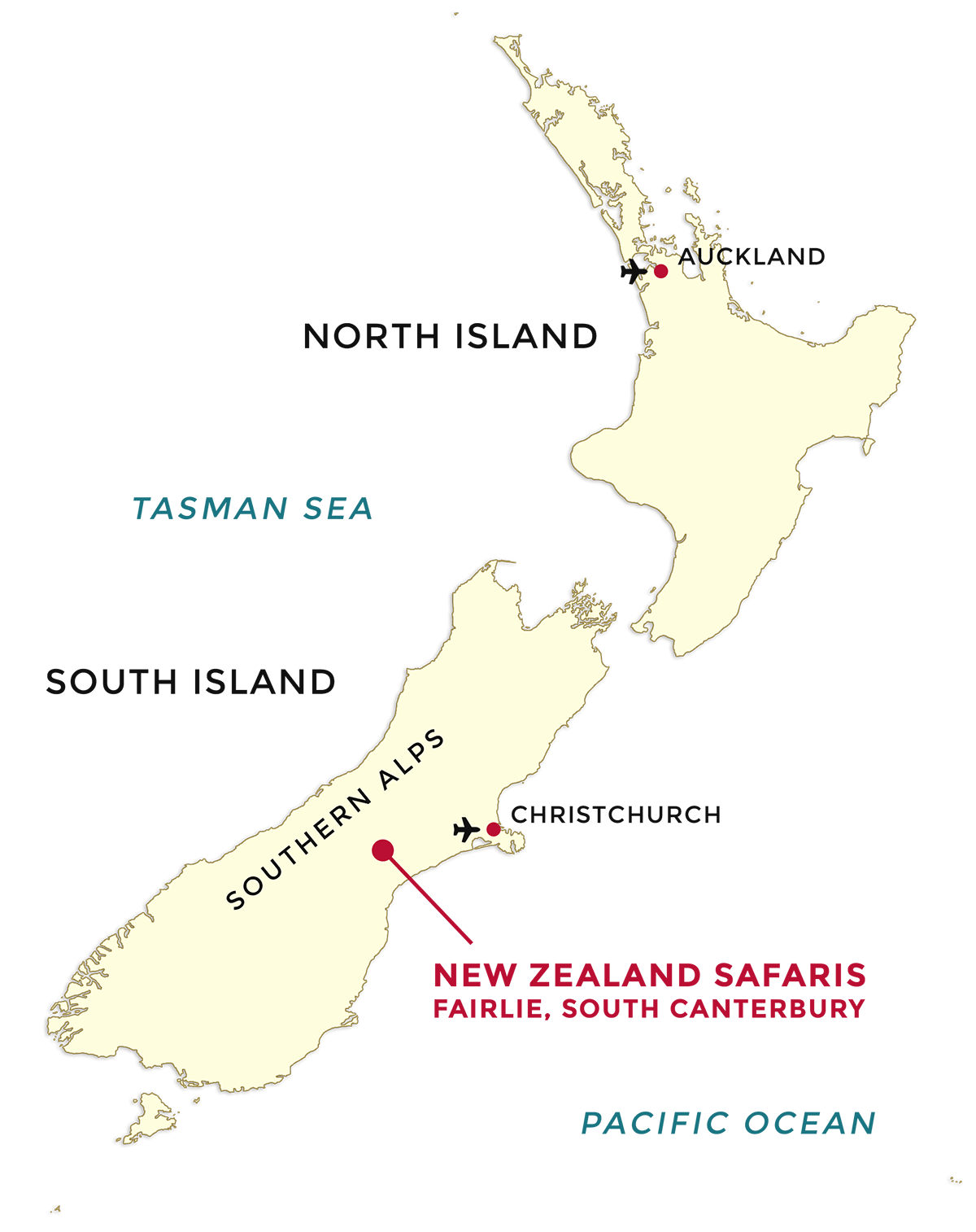
Most hunters should fly into Christchurch International Airport in the South Island. The lodge is located in Fairlie, South Canterbury, approximately 2.1–2.2 hours from Christchurch.
Most North American itineraries travel from the United States or Canada to Auckland, then connect onward to Christchurch. Common departure cities include San Francisco, Los Angeles, Houston, New York and Vancouver. Air New Zealand is commonly used, often through a United code-share, although other airlines may also travel to New Zealand via Australia or other routes.
At Auckland International Airport, follow the green line to the domestic terminal — usually around a 10-minute walk or shuttle transfer. There are regular flights between Auckland and Christchurch, so missing a connection is usually manageable, but always allow sensible transfer time.
Arrival timing
When travelling from North America to New Zealand, remember that you will usually “lose” a day on the way over because of the international date line. For example, if you depart the United States on the 1st, you may arrive in New Zealand on the 3rd.
We recommend arriving in Christchurch at least one day before your hunt starts. This gives you time to rest, adjust to the time zone, and avoid feeling rushed before the first hunting day.
Example itinerary
If your hunt starts on the 4th, you may depart North America on the 1st, arrive in Christchurch on the 3rd, stay one night in Christchurch, then be picked up and transferred to the lodge on the morning of the 4th.
Christchurch hotel options
Many hunters choose to stay in Christchurch on their first night after arrival. This makes the first morning of the hunt more relaxed and gives you time to recover from the international flight. Recommended options include:
- Commodore Airport Hotel — use discount code NZSAFARI
- Novotel Christchurch Airport
- Distinction Christchurch Hotel
There are many other hotel options in Christchurch, but these are convenient choices for arrival and transfer logistics.
Transfers to the lodge
Unless you are self-driving, we will pick you up and drop you off as arranged. Most hunters are transferred from Christchurch to the lodge in Fairlie.
Some clients prefer to self-drive before or after the hunt. If you are planning to self-drive, please let us know so we can help coordinate your arrival timing and logistics. We can also arrange airport pickup when you land in Christchurch — please contact Jim in advance so this can be discussed and confirmed.
Entry requirements: NZeTA / visitor visa
Most North American visitors will need to complete New Zealand entry requirements before travel. This is typically done online through the official NZeTA process. An NZeTA can be used for multiple visits while valid and is valid for two years.
Before you travel: verify current requirements and fees directly with Immigration New Zealand, as visitor entry requirements can change.
New Zealand Traveller Declaration
It’s a good idea to complete your New Zealand Traveller Declaration before you travel. This can be done through the official NZTD app and can save time when arriving. You will need your passport to complete the declaration.
Biosecurity: clean your gear before you fly
New Zealand takes biosecurity seriously. Make sure your hunting gear is clean before you travel — especially your boots. Your boots and gear should be free of dirt, seeds, meat or other organic material. This helps speed up your arrival process and reduce issues when entering the country.
Bringing firearms to New Zealand
Firearms can be brought into New Zealand, but you need to complete the correct paperwork before travel. If you prefer not to bring your own rifle or shotgun, New Zealand Safaris can supply one for you.
If you do bring your own firearm, you will need to complete the New Zealand visitor firearms process and ensure your firearm and ammunition details are correct before travel. The official Firearms Safety Authority requires visitors bringing arms items or ammunition to declare what they are bringing when completing the visitor firearms licence application.
USA firearm return: CBP Form 4457
If you are travelling from the United States with a firearm, complete CBP Form 4457 before departure. This should be completed and signed or stamped by a U.S. Customs officer before leaving the United States. List the firearm details — including make, model, calibre and serial number — and we also recommend listing the scope details. CBP describes Form 4457 as the “Certificate of Registration for Personal Effects Taken Abroad.”
Visitor firearms licence information
If bringing your own rifle, prepare the information needed for the New Zealand visitor firearms application, including: personal details; passport details and country of issue; evidence of a firearm licence or equivalent in your home country; address while in New Zealand; firearm storage location; host/contact details; purpose of importation; arrival and departure airport, dates and flight numbers; firearm description, make, model, calibre and serial number; and ammunition quantity.
Details you’ll need
Address in New Zealand:
626 Hamilton Road, Fairlie, South Island, New Zealand 7987
Firearm storage: Lodge Firearm Storage
Host: James Gibson
Ammunition
Airlines have specific weight restrictions for ammunition in checked baggage — typically a maximum of 5 kg, which equates to roughly 2–4 boxes or 60–80 rounds of rifle ammunition. Do not exceed your airline’s limit; two boxes are usually more than enough, and ammunition may also be available in New Zealand. Always check directly with your airline before travelling, as rules vary.
Travel insurance
We strongly recommend taking out travel insurance when booking your flights. International hunting trips involve flights, weather, luggage, equipment, health and timing variables, so insurance is an important part of planning. Make sure your policy covers your full trip, including the hunting portion, and confirm any exclusions directly with your insurer.
Booking flights and hotels
We recommend starting hotel and airline reservations around 9–10 months in advance, especially during popular hunting or travel periods. When searching for flights, check different departure airport options and use flexible date or “search by week” tools to find better fares. Air New Zealand is commonly used by hunters from the United States, but United, Qantas and others may be relevant depending on your route. If you would like a pre-planned tour, Esplanade Travel is one option.
Weather and clothing
New Zealand weather can change quickly, sometimes within a single day. We carry wet-weather gear throughout most of the year, but you should arrive prepared with suitable clothing.
| Season | Months | Approx. temperature |
|---|---|---|
| Summer | February–March | 45°F–85°F / 7°C–29°C |
| Fall | April–May | 32°F–70°F / 0°C–21°C |
| Winter | June–September | 20°F–60°F / -6°C–15°C |
Winter conditions can feel similar to many parts of the central United States, Alaska and Canada. Good warm clothing is especially important during the colder months.
Terrain and fitness preparation
For deer species, much of the South Island terrain is rolling hills and valleys. For Tahr and Chamois, expect rolling hills, mountain country and more physical climbing. The hunting can feel similar to parts of Wyoming or Colorado, but with more open country and fewer trees on the East Coast, allowing for long-distance glassing.
Most hunters can hunt the deer species comfortably because much of this is private ranch-style land with good roads. The most important preparation is being confident with prone shots, especially at longer distances. Your guide will help set you up, and you’ll put a couple of rounds through the rifle at the start of the hunt. Tahr and Chamois hunts can require more climbing — often 1–2 hours of uphill walking or sidling at a steady pace. Helicopter options may be available for Tahr and Chamois, depending on weather and the hunt plan.
Shot distances and practice
| Game | Typical distance |
|---|---|
| Deer & most game | 150–250 yards |
| Tahr & Chamois | 250–400 yards |
| Bow hunting | 40–70 yards |
Practice prone shooting, including uphill and downhill shots — around 90% of shooting is from a lying-down position.
Rifle & bow preparation
Suitable calibres for New Zealand species include .270, .300 and 7mm-class rifles. We recommend approximately 40 rounds of ammunition and sighting your rifle for around 250 yards. A good-quality scope is essential — at least 10x or 14x power, with a scope cover. A bipod is a valuable asset when hunting the hills. Please bring a soft rifle case inside your hard gun case, as this is how your rifle will travel while hunting. If you prefer not to bring your own rifle or shotgun, we can supply one.
Bow hunting
Bow hunters should bring: plenty of broadheads; at least two dozen shafts; necessary spare parts and accessories; a rangefinder; and any specialist equipment needed for your setup.
Gear list
Coming into New Zealand, make sure your gear is clean, especially your boots. Recommended hunting gear includes:
- Broken-in mountain hunting boots with waterproof, durable soles and a good heel
- Light shoes for camp and town
- Gaiters for Tahr and Chamois foot hunting
- Warm hiking socks, preferably wool
- Warm hunting pants and long johns; light hunting pants and/or polar fleece bottoms
- Wind/rainproof over-trousers
- Heavyweight warm shirts (merino or polar fleece), plus one light shirt
- Wool jersey or quality fleece top
- Warm hat and sun hat
- Cold-weather gloves and lighter under-gloves
- Wind/rainproof jacket in tan, green or camouflage
- Optional insulated layer or vest, especially May–September
- Thermal base layers / underclothes
- Sunglasses for snow glare
- Small day backpack, preferably one that can carry a rifle
- Good-quality binoculars, water bottle, headlamp and spare batteries
- Camera and spare batteries
- Personal medicines, toiletries and medical gear
For Tahr and Chamois camp-out hunts, bring a good sleeping bag and a mountain pack suitable for carrying a rifle or bow and personal gear.
Electrical adapters
New Zealand uses 240V power and a 2–3 pin plug. Most modern electronics handle 110–240V, but check your device or charger before travel. You’ll usually need a plug converter — these can often be purchased at stores or airports, and some are available at the lodge.
Driving in New Zealand
If you have a driver’s licence in your home country, you can drive in New Zealand. Remember that New Zealand drives on the left-hand side of the road. Self-driving can be a good option if you plan to tour before, during or after the hunt, and we can recommend local vehicle rental companies. The South Island has lower traffic than many visitors expect, but allow enough travel time and take care on rural roads.
Contact details while in New Zealand
New Zealand Safaris
626 Hamilton Road, Fairlie, South Island, New Zealand 7987
Jim’s cell: 027 430 3876 · WhatsApp: +64 27 430 3876
Anna’s cell: 021 308 840
Jim’s USA cell (Jan–Feb): 307 355 9356
When calling from the USA, dial 011-64 and drop the first 0 from the NZ number — e.g. 027 430 3876 becomes 011 64 27 430 3876. You can also save it as +64 27 430 3876.
Optional: Christchurch before the hunt
If you have time in Christchurch before your hunt, worthwhile places to visit include Riverside Market and Little High Eatery, New Regent Street, the Christchurch Botanic Gardens, Tūranga central library, the Christchurch Gondola, and the Arts Centre and Christchurch Art Gallery.
Ready to plan your hunt?
Have a question before you travel, or ready to take the next step?