Your New Zealand hunt is designed to be professionally guided, flexible and comfortable from the moment you arrive at the lodge.
During your stay, you’ll hunt private land across the South Island, with terrain and access matched to your species, ability, weather conditions and hunting goals. Some days may involve glassing open country and stalking through rolling hills. Others — especially Tahr and Chamois hunts — may involve steeper mountain country, longer climbs or optional helicopter access. Between hunts, you’ll return to comfortable lodge accommodation, home-cooked meals and a relaxed base in Fairlie, South Canterbury.
What to expect during your hunt
Most hunts are based from Fairlie in New Zealand’s South Island. The lodge is located around 2.2 hours south of Christchurch and around 3.5 hours north of Queenstown. The hunting areas are close to the lodge, making it easy to access different properties depending on the weather, species and plan for the day.
For most deer species, the terrain is rolling hills, valleys and private ranch-style country. For Tahr and Chamois, the terrain can become more mountainous, with steeper hills, river valleys and alpine areas. Your guide will help set the pace, choose the right hunting areas and get you into position for the best possible shot opportunity.
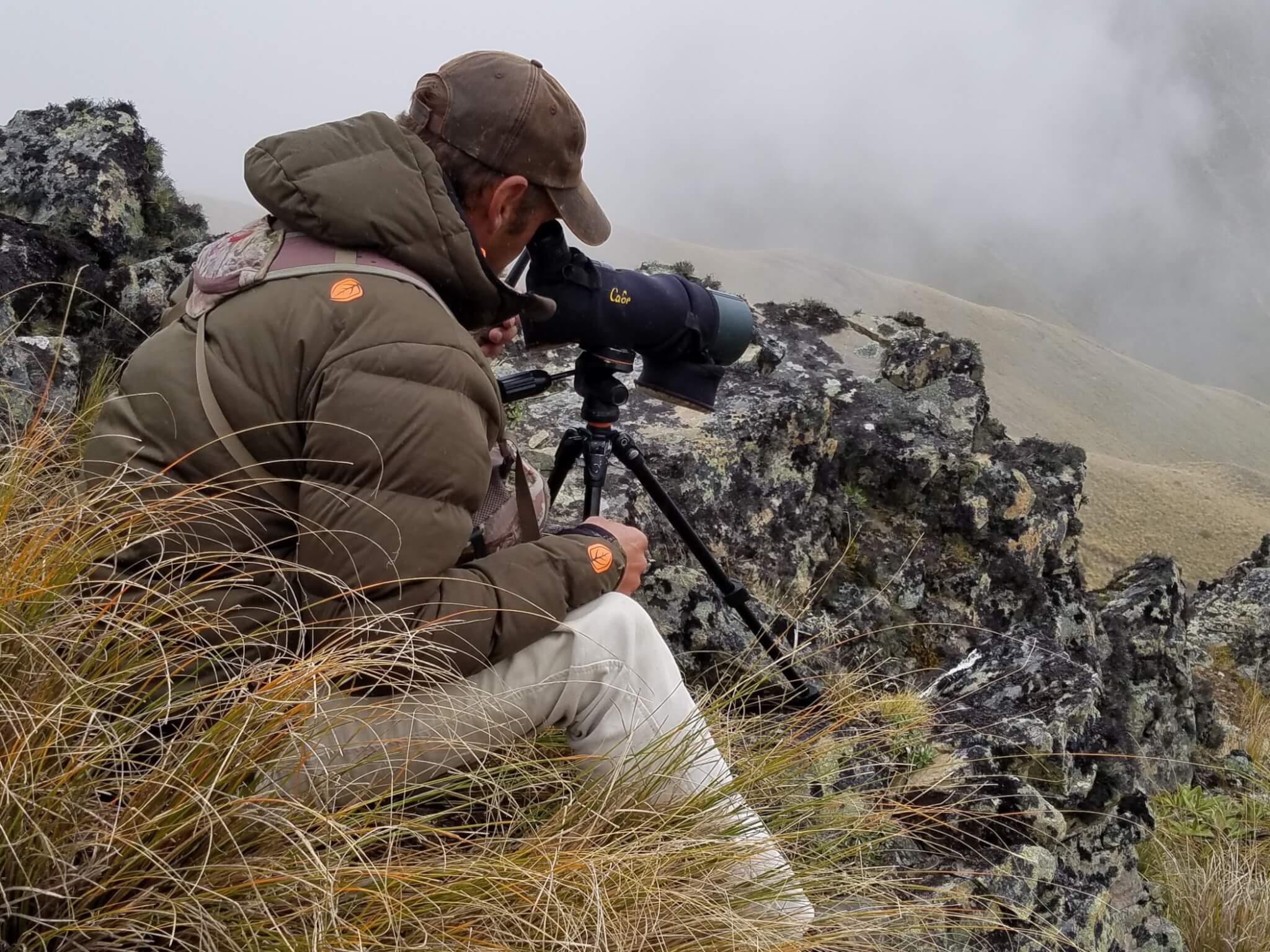
Terrain and hunting style
The South Island terrain ranges from rolling hills and valleys for deer species through to hill and mountain country for Tahr and Chamois. The East Coast has open country with fewer trees than many North American hunters expect, allowing for long-distance glassing across hillsides, valleys and native vegetation.
For deer species, many hunters find the terrain very manageable — much of the hunting is on private land with good road access. For Tahr and Chamois, expect more climbing, sidling and mountain-style hunting; some climbs may take one to two hours at a steady pace, depending on the animal, terrain and access on the day. The hunt is always adapted as much as possible to the hunter’s ability, comfort level and goals.
Guides, safety and support
You’ll be guided throughout your hunt. Your guide will help with glassing, stalking, judging animals, setting up for the shot and making sure you’re comfortable in the terrain being hunted.
For mountain hunts or more remote outings, your guide will carry key safety equipment — including a phone capable of satellite text, a first aid kit, an emergency EPIRB and extra gear if needed. At the start of the hunt, you’ll also have the opportunity to put a couple of rounds through the rifle, confirming your setup and giving you confidence before heading into the field.
Shot distances
Shot distances vary depending on the species, conditions and what the hunter is comfortable with. As a general guide:
| Game | Typical distance |
|---|---|
| Deer & most game | 150–250 yards |
| Tahr & Chamois | 250–400 yards |
| Bow hunting | 40–70 yards |
Your guide will help set you up properly and make sure you’re comfortable before taking a shot. Prone shooting is common in New Zealand hill country, so hunters should be comfortable shooting from a lying-down position, including uphill and downhill angles.
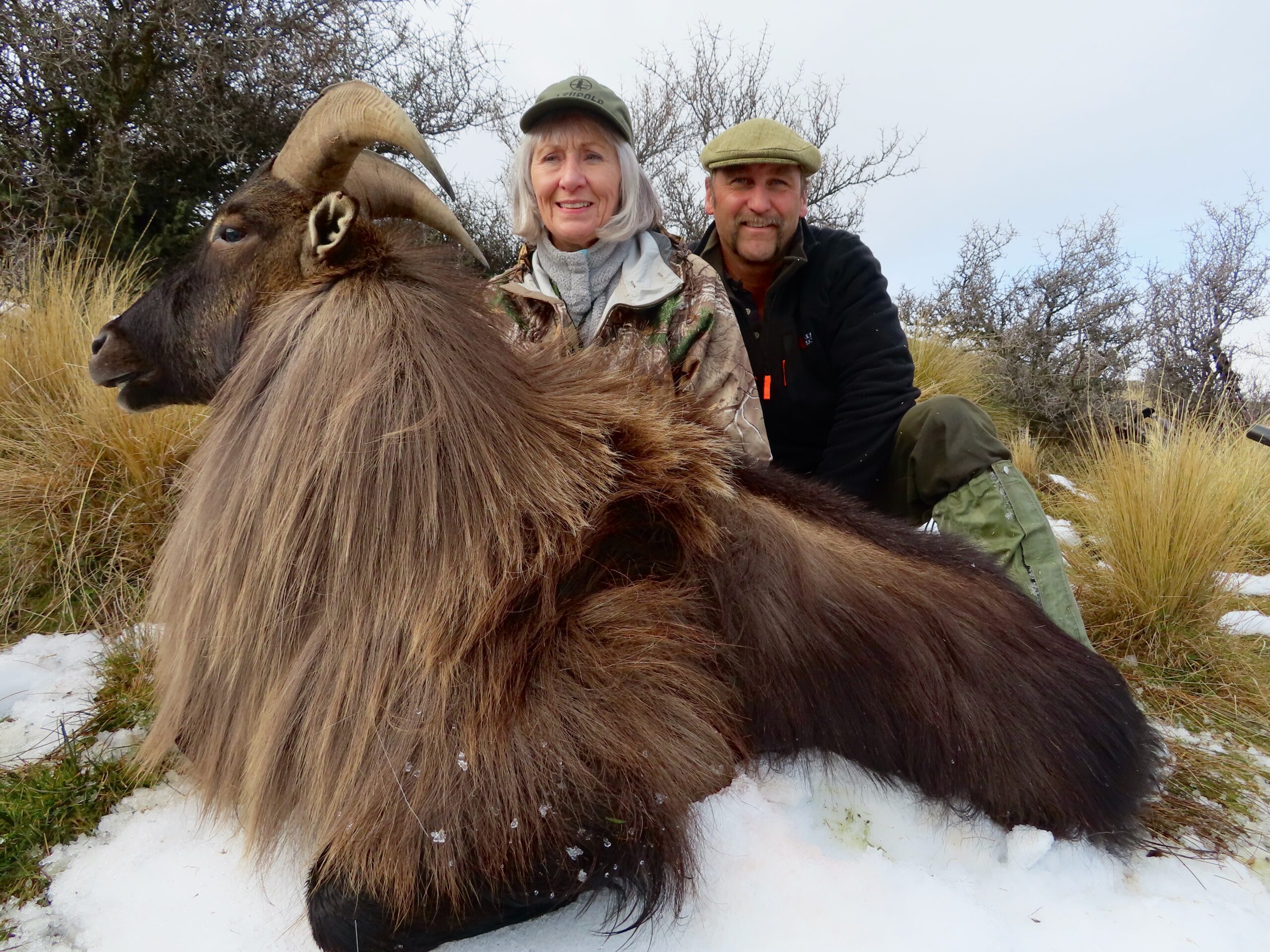
Tahr and Chamois hunts
Tahr and Chamois hunts are often more physically demanding than deer hunts. Depending on the property and conditions, these hunts may involve river valleys, road-accessible glassing points, steeper hill country or mountain terrain. Good fitness helps you enjoy the hunt more and gives you more options in the field — though these hunts can be adapted to suit different abilities where possible.
For clients who prefer to reduce climbing or maximise hunting time, helicopter access may be available for Tahr and Chamois. Flying is weather-dependent and can also be used for scenic flights if time allows.
Weather during the hunt
New Zealand weather can change quickly, sometimes within the same day. We carry wet-weather gear throughout most of the year, but hunters should still bring suitable clothing for the season.
| Season | Months | Approx. temperature |
|---|---|---|
| Summer | February–March | 45°F–85°F / 7°C–29°C |
| Fall | April–May | 32°F–70°F / 0°C–21°C |
| Winter | June–September | 20°F–60°F / -6°C–15°C |
In winter, good warm clothing is essential. Conditions can feel similar to hunting in parts of the central United States, Alaska or Canada.
Staying at the lodge
Most hunters stay at All Seasons Lodge in Fairlie. The lodge is private, comfortable and located close to the hunting properties. Each room has its own ensuite bathroom, king bed, TV and Wi-Fi. During your stay, you can expect home-cooked New Zealand meals — including wild game, seafood, grass-fed beef and lamb, fresh vegetables, desserts and local beer or wine. After a day in the hills, the lodge gives hunters a comfortable place to relax, eat well, rest and prepare for the next day.
Meals and downtime
Meals are part of the lodge experience. Breakfast is cooked or continental, and evening meals are prepared at the lodge after the day’s hunt. Between hunts, there’s time to relax, enjoy the views, use Wi-Fi, spend time with family or non-hunters, and prepare gear for the next outing. If you bring extra gear and don’t need it in the field, it can be safely stored while you’re hunting.
Non-hunters and family members
New Zealand is a strong destination for non-hunters and family members as well as hunters. Non-hunters can relax at the lodge, join suitable parts of the hunt where appropriate, self-drive locally, or take guided day trips. Options can include glaciers, lakes, hiking, shopping, day spas, hot pools, restaurants and scenic touring around the South Island. Tour guiding can be arranged from the lodge, with day touring available and longer stay-away trips arranged if needed.
4WD, photo safaris and scenic options
For guests who want to see more of the South Island during the hunt, 4WD and photographic safari options can be arranged — scenic backcountry touring, wildlife viewing, mountain landscapes, lakes, glaciers and private touring routes. These are particularly useful for spouses, family members or hunters who want to combine a hunting trip with a broader New Zealand experience.
Electrical, phone and end-of-hunt admin
New Zealand uses 240V power with a 2–3 pin plug. Most modern electronics are compatible with 110–240V, but check your charger before travelling — you’ll usually need a plug converter, and some may be available at the lodge. The whole country is on one time zone; the easiest way to check the time difference is to add Wellington, New Zealand, to the world clock on your phone.
End-of-hunt payment
The balance of the hunt is paid on the final evening. Payment can be made by card or wire through the Flywire system, and USD cash may also be accepted as part balance. Cheques are not commonly used in New Zealand — if you plan to pay by wire, make sure your bank is aware before you travel so payment can be arranged during banking hours. Tipping, trophy care, taxidermy and shipping are covered in the After Your Hunt section.
Contact details while in New Zealand
New Zealand Safaris
626 Hamilton Road, Fairlie, South Island, New Zealand 7987
Jim’s cell: 027 430 3876 · WhatsApp: +64 27 430 3876
Anna’s cell: 021 308 840
Jim’s USA cell (Jan–Feb): 307 355 9356
When calling from a US cell, dial 011-64 and drop the first 0 from the NZ number — e.g. 027 430 3876 becomes 011 64 27 430 3876.
If you have questions during the hunt, please ask your guide or contact Jim or Anna. The goal is to make the experience enjoyable, safe and well organised for hunters and non-hunters alike.
Ready to start planning?
Have a question before you arrive, or ready to book?